
Inquiry, Budget, Languages & Process
From pre-redesign prep, budget planning, multilingual strategy, to contact channels and inquiry funnels
Website redesign is a $5K-50K decision. How to allocate budget, how many language versions, how to set up contact channels, what to prepare beforehand — these 7 articles cover the decisions SMEs grapple with before redesign.

Q2. Why Website Redesign Budgets Can Differ So Much
Two projects may both be called corporate website design, but the scope can be completely different.
Read more
Q2. Why Website Redesign Budgets Can Differ So Much
Two projects may both be called corporate website design, but the scope can be completely different.
Read moreThe same phrase, "corporate website design," can refer to very different scopes. The difference usually comes from four levels:
- NT$50,000 to NT$80,000: template setup and content replacement. A ready-made theme is used, with logo, colors, and copy changed. It can work, but it may look similar to many other websites and is difficult to shape around industry-specific needs.
- NT$100,000 to NT$180,000: custom visual design with standard functions. The website has a redesigned visual system, basic SEO, contact forms, and product categories. This is suitable for an SME that needs a credible basic digital front door.
- NT$200,000 to NT$350,000: strategy-led custom website. This includes content planning, SEO architecture, multilingual structure, inquiry paths, and industry-specific sections such as catalog downloads, specification tables, or CAD file downloads.
- NT$400,000 to NT$500,000 and above: full repositioning. This may include brand positioning, CIS, photography, animation, a complex backend, or ERP integration. Companies usually do this only once every five to ten years.
For SMEs, the key is not to choose the most expensive option. The right budget should match the current business stage. If the main purpose is to help existing customers find information and new buyers submit inquiries, a mid-level custom project often delivers the best value.
Q4. What to Prepare Before a Website Redesign
Most companies do not have perfect materials ready. A good redesign process helps organize what already exists.
Read more
Q4. What to Prepare Before a Website Redesign
Most companies do not have perfect materials ready. A good redesign process helps organize what already exists.
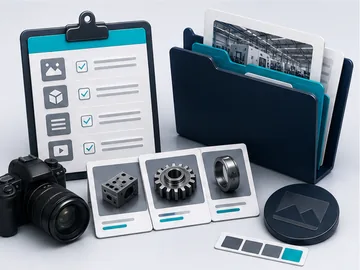
Read moreMany business owners think they must prepare everything before contacting a design company, so the redesign is delayed for years. In practice, you only need a few basic materials to begin:
- Required: Chinese and English company names, logo files, address, phone number, email, and a basic introduction to the products or services.
- Helpful if available: real product photos, factory or equipment photos, certifications such as ISO, CE or UL, approved customer logos, and three to five competitor websites.
- Can be prepared later: English or Japanese content, case studies, news posts, and longer technical copy.
The truth is that most SMEs do not have complete materials at the beginning. A good design partner should help organize and complete the missing pieces during the project, including photography direction, product copy, and content structure.
Q5. From Audit to Launch: A Practical Website Redesign Process
A lower-risk process gives the business owner a visible decision point before the full rebuild.
Read more
Q5. From Audit to Launch: A Practical Website Redesign Process
A lower-risk process gives the business owner a visible decision point before the full rebuild.
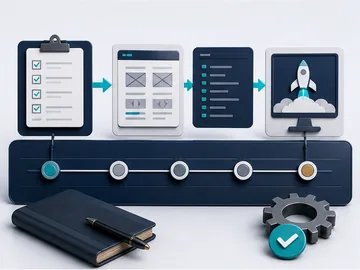
Read moreYingCe ZhiZao's standard redesign process has six steps, and each step has a clear decision point where the company can pause or continue:
- Free website audit. Enter the website URL and review seven key dimensions. There is no fee and no commitment.
- Manual deep review. From a product and business perspective, we review brand presentation, product structure, inquiry paths, and competitor gaps.
- Homepage direction preview. We create a new homepage direction first, so you can see the difference before deciding whether to continue.
- Formal website rebuild. This includes the homepage, inner pages, product categories, cases, FAQ, and contact flow.
- SEO and conversion optimization. We improve structured data, CTA design, mobile layout, and search visibility.
- Launch and annual maintenance. This includes SSL, backups, security updates, quarterly health checks, and content assistance.
The full process usually takes about eight to fourteen weeks. The most important step is the homepage direction preview: you can see the new direction before paying for the full production stage.

Q6. Google Translate vs Professional Website Translation
A translation plug-in may be cheap, but it often damages trust and search visibility.
Read more
Q6. Google Translate vs Professional Website Translation
A translation plug-in may be cheap, but it often damages trust and search visibility.
Read moreMany manufacturing business owners ask whether a Google Translate plug-in is enough because it is cheap and convenient. For international business, this can seriously damage credibility. The difference appears in three areas:
- Technical terminology can be wrong. Machine translation may produce words that are understandable but not industry-standard, such as translating terms literally while missing the wording used by buyers and engineers.
- SEO does not work properly. Auto-translated content from a plug-in is usually not treated as a proper language version of the page. Your English pages may not be indexed or ranked as real English pages.
- Trust becomes weaker. Overseas buyers who see a translation plug-in may feel that the company is not serious about export markets.
A practical approach is to professionally prepare the homepage, main product categories, and contact pages, then use AI-assisted translation with human review for secondary product and technical pages. This controls cost while keeping the important pages credible.
Q11. Should an Outdated Website Be Repaired or Rebuilt?
The right answer depends on technology, SEO history, source files, and current business value.
Read more
Q11. Should an Outdated Website Be Repaired or Rebuilt?
The right answer depends on technology, SEO history, source files, and current business value.
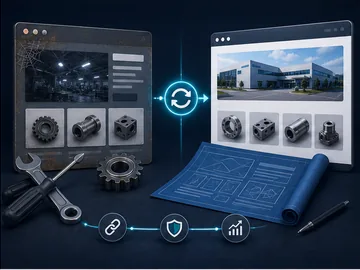
Read moreWhen a website has not been updated for five to ten years, the question is whether to repair it or rebuild it. These four signals can help decide:
- Rebuild is recommended when: the site uses Flash, is not responsive, runs on an old Joomla or custom PHP backend, has missing source files, has SSL problems, or the original developer can no longer be reached.
- Repair may be enough when: the site is on WordPress 5.0 or later, has a responsive structure, has source files, and the information architecture is still clear. Repair may cost about thirty to fifty percent of a full rebuild.
- Repair while rebuilding when: the old site has valuable SEO history, such as long-term top rankings for specific keywords. A sudden full replacement may lose rankings for three to six months. A gradual rebuild on the same domain is safer.
- Do not casually change the domain. This is one of the most costly mistakes SMEs make because it can reset years of accumulated Google value.
If you are not sure which situation applies, start with a free website audit before deciding whether deeper evaluation is needed.
Q19. How Many Language Versions Should You Actually Build? Export Market Decision Table
Not every B2B company needs 13 languages. Over-translation drags timeline and budget. Decision matrix based on your export market reality...
Read more
Q19. How Many Language Versions Should You Actually Build? Export Market Decision Table
Not every B2B company needs 13 languages. Over-translation drags timeline and budget. Decision matrix based on your export market reality...
Read moreMany SMEs assume "more languages = more export sales". In practice, an unmaintained, machine-translated Vietnamese page hurts your brand more than no Vietnamese page at all.
Decision matrix based on your export reality:
- Domestic only → Traditional Chinese only. Don't waste resources.
- Export single market (e.g., USA, Japan) → Traditional Chinese + that market's language. Two language versions, fully maintained, professionally translated.
- Export Japan-focused → Chinese + English + Japanese. Japanese MUST be done by a native speaker — Japanese buyers will reject Google-translated content immediately.
- Multi-market (Asia + Europe) → Chinese + English + Japanese + Vietnamese / Thai / Indonesian (Asia) + German / French (Europe). 6-8 languages, but each must be maintained.
- Global SaaS / consumer-facing → 12+ languages with proper i18n architecture and translation workflow.
The rule of thumb: better fewer languages done well than many languages done poorly.
If your existing Vietnamese version was Google-translated, take it down. A serious Vietnamese buyer would rather see English than poorly-translated Vietnamese.
See how YingCe maps language strategy in our multilingual content architecture service.
Q20. Phone, LINE, Email, Form, Messenger — Which Channels Should You Offer?
B2B buyers at different decision stages prefer different channels. Offer all the right ones, but let buyers pick what suits their stage...
Read more
Q20. Phone, LINE, Email, Form, Messenger — Which Channels Should You Offer?
B2B buyers at different decision stages prefer different channels. Offer all the right ones, but let buyers pick what suits their stage...
Read moreB2B buyers at different decision stages prefer different contact channels. Your site should offer all the right ones — but use sticky CTAs or floating action buttons so each buyer can pick what suits their stage:
- First contact → Inquiry form. Both sides have written records, sales has time to prepare a response. Safest first touch.
- Quick evaluation Q&A → LINE official account (or WhatsApp Business). Short messages, low friction. Younger procurement teams prefer this.
- Formal quote exchange → Email. Archived, attachments supported, fits formal B2B communication.
- Urgent contact → Mobile phone / dedicated hotline. For engineering, fire safety, equipment industries — urgent repair / urgent purchase is common.
- FB Messenger: only for consumer-facing brands. B2B buyers don't use Messenger to source suppliers.
Recommended setup: Inquiry form (primary CTA) + LINE / WhatsApp QR (secondary CTA) + mobile click-to-call + email (footer). Skip Messenger.
Use a sticky bottom bar or floating action button so every page is one tap from contacting you. Lower the friction of being contacted, and inquiry volume rises.
Read everything and still
not sure where to start?
Enter your URL, get a 30-second free audit. We'll tell you which recommendation best applies to your situation.